
 CALL US NOW
 EMAIL US NOW
Do You Own a North Carolina Farm or Fishery?
If you or your business has accumulated too much debt, you may seek relief under Chapter 7, 11, or 13 of the United States bankruptcy code, but farmers and fisherman have another option, a Chapter 12 bankruptcy with help from a North Carolina bankruptcy attorney.
“Chapters” refer to the chapters of the U.S. Bankruptcy Code, the federal law that governs bankruptcy in every state. In many cases, a Chapter 12 bankruptcy is the best tool for solving the specific debt problems faced by the owners of farms and fishing related businesses.
If you are the owner of a farm or fishing business, and you can no longer meet your financial obligations, you should schedule a consultation as quickly as possible with a North Carolina bankruptcy lawyer to discuss your rights and your options for debt relief and bankruptcy.
What Does a Bankruptcy Provide?
Chapter 12 of the Bankruptcy Code addresses the concerns of farms and fishermen. Like a Chapter 13 bankruptcy, a Chapter 12 bankruptcy allows farmers and fishermen to avoid foreclosures, repossessions or collection actions and prepare a debt repayment plan.
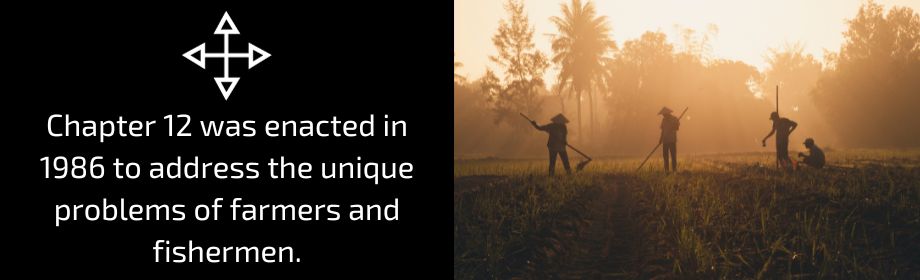
Chapter 13 is not a good tool for farmers and fishermen because Chapter 13 is designed for people who make regular wages and, unlike farmers, do not have large equipment loans and incomes that change seasonally. Chapter 12 was enacted in 1986 to address the unique problems of farmers and fishermen.
Like Chapter 13 bankruptcy, debtors in Chapter 12 bankruptcy prepare a debt reorganization plan. That plan must show how creditors will be repaid over a period of three to five years.
What is an Automatic Stay?
Also, like all chapters of bankruptcy, the Court orders an automatic stay upon the filing of a Chapter 12 bankruptcy petition. The automatic stay orders creditors to halt collection activities, including foreclosures or repossessions, against you. The automatic stay is a powerful legal tool.
The automatic stay allows a farmer’s or fisherman’s daily operations to continue without the fear of immediately losing assets and it helps the owner keep the farm or fishing business afloat during the bankruptcy period. As long as the automatic stay is in effect, creditors may not file or proceed with foreclosures, repossessions, or lawsuits, or take any action to collect debts.
What Additional Benefits Does Chapter 12 Offer?
For farms and fishing businesses, Chapter 12 bankruptcy provides benefits that extend beyond what Chapter 7 and Chapter 13 bankruptcies offer. Assets are usually not at risk to be sold or otherwise liquidated in Chapter 12 bankruptcy, and debt limits are not as rigid.
Moreover, with a Chapter 12 bankruptcy, plan payments may accommodate seasonal earnings and be made monthly, quarterly, or annually, and do not have to be equal. Payments for expensive property and equipment may be extended beyond the end of the bankruptcy.
Another benefit of Chapter 12 is that creditors are not entitled to be paid more in a Chapter 12 bankruptcy than they would receive in a Chapter 7 bankruptcy, which is a liquidation bankruptcy. A secured creditor may only be entitled to the current market value of its collateral and unsecured creditors may not be paid anything. The concept, for secured creditors, is called “cramdown,” and it works as follows:
What Does It Mean to “Cram Down” a Debt?
Assume a farmer finances a tractor three or four years before he files a bankruptcy. The tractor is the collateral for the loan and it may be repossessed if the farmer does not make payments. Upon filing a bankruptcy, the farmer owes $40,000 on the tractor, but the fair value of the tractor is now only $25,000.
In a Chapter 7 bankruptcy, the creditor is entitled to repossess the tractor and sell it. Assuming that the creditor receives $25,000 from selling the tractor, the remaining $15,000 becomes unsecured debt and may be discharged (or “forgiven”) in the Chapter 7. Under Chapter 12, the owner may keep the tractor and “cram down” the loan to pay back what the tractor is worth, $25,000. The remaining balance, $15,000, is an unsecured debt that may or may not be paid in part or in full during the course of the Chapter 12 bankruptcy and the farmer eventually receives a discharge for any remaining, unpaid balance.
In addition, the farmer may also change the terms of the payments, including changing the interest rate, the length of the loan and the frequency of payments. Changing the terms of the loan is also called a “cramdown.” Regardless of what the original loan documents say, the farmer in the above example may propose to pay the $25,000 over 5 years at 5% interest, with annual payments beginning on a certain date.
But Chapter 12 has an advantage that no other chapter of bankruptcy has. Not only can Chapter 12 debtors cram down on secured debts (which is also possible in Chapter 11 and Chapter 13), but, unlike all other chapters of bankruptcy, farmers or fishermen who file a Chapter 12 may cram down or modify the terms of the mortgage on their primary residence. Chapter 12 bankruptcy is the only bankruptcy that allows debtors to modify a mortgage on their house by paying less than what is owed on the house (if the house is worth less than the debt), or by changing the terms of the mortgage, including the interest rate and the term.
Who May File a Chapter 12 Bankruptcy?
To file for a Chapter 12 bankruptcy, North Carolina farmers and fishermen must meet these requirements:
- More than half of a debtor’s income in the tax year before the debtor filed for bankruptcy must have been derived from farming or fishing.
- More than half the debtor’s debts must have been incurred for the farming or fishing business.
- The farmer or fishermen needs regular annual income to confirm a Chapter 12 Plan or otherwise have assets that can be used to make debt repayments.
What Does the Bankruptcy Court Require?
The disclosures and other documents necessary for a Chapter 12 bankruptcy include:
- a full list of creditors and what they are owed;
- the source, frequency, and amount of the farmer’s or fishermen’s income;
- a complete list of the assets of the farm or fishing business; and
- a summary of the farmer’s or fisherman’s monthly expenses.
For married couples, if only one spouse files for the Chapter 12 bankruptcy, the other’s income and expenses must be disclosed so that the bankruptcy court may consider the couple’s overall financial situation.
What Else Should You Know About Chapter 12 Bankruptcies?
Bankruptcy is a serious decision and there can be negative (but temporary) consequences for your credit. However, the purpose of bankruptcy is to efficiently and fairly resolve all of your debts in one court so that you may stay in business and regain solid financial footing. Bankruptcy not only fixes debt problems, it also fixes credit problems so that you can move forward with your business and life.

You should discuss your options with a North Carolina bankruptcy attorney. Bankruptcy may not be your best option, but if it is, your attorney will work with you and prepare the documents necessary to file your bankruptcy petition with the court. You need an attorney who:
- will take the time to understand your business and your circumstances;
- will explain all of your debt relief options; and
- routinely handles Chapter 12 bankruptcies for North Carolina farmers and fishermen.
Let Gillespie & Murphy Handle Your Chapter 12 Bankruptcy
There’s no need to make an extensive search for a North Carolina bankruptcy lawyer. If you own a farm or fishing business in North Carolina, and if you are struggling to pay the debts of the farm or fishing business, schedule a consultation with the lawyers at Gillespie & Murphy.
Our legal team will explain your rights and options and provide specific, personalized debt relief and bankruptcy advice. The law offices of Gillespie and Murphy are located in Wilmington, New Bern, Greenville, and Jacksonville.
Don’t wait. If you own a farm or fishing business in North Carolina, and if your debts are overwhelming, contact Gillespie & Murphy by calling 252-659-5045 and let us provide the advice and guidance that you need.


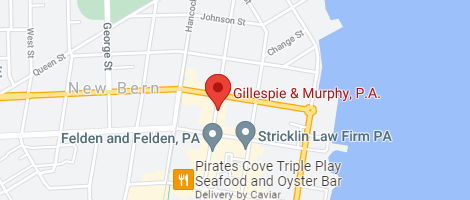
 320 Middle St
 252-659-5045